
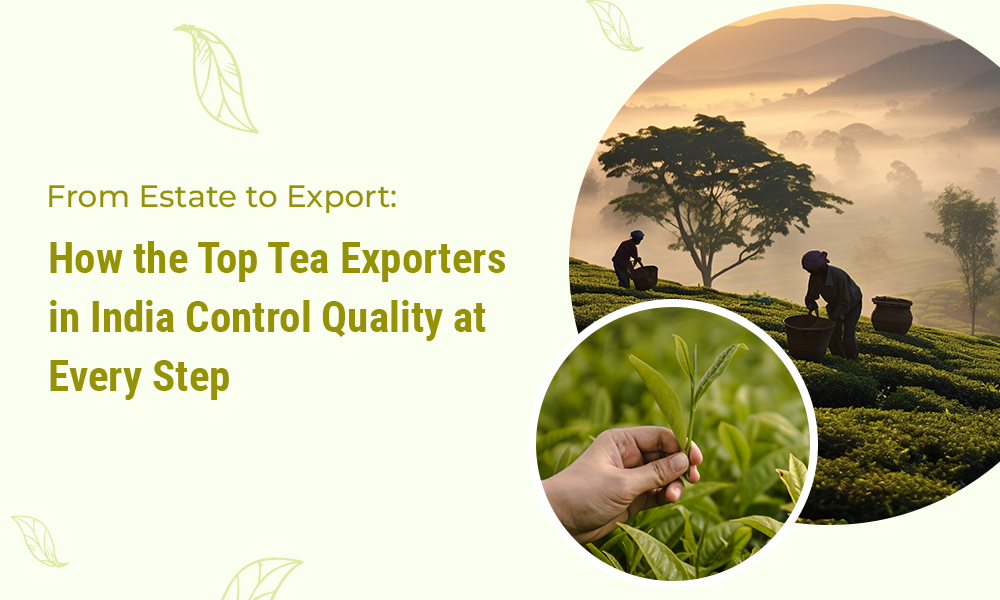
Where Every Leaf Has a Story
Walk into any cup of exceptional tea, and you are tasting more than flavour. You are tasting discipline, patience, and hundreds of invisible decisions made long before the leaves reached your cup. That unseen journey is what separates ordinary tea from export-grade excellence. This is especially true when you look closely at how the top tea exporters in India operate. Their process is not rushed, not accidental, and definitely not improvised.
At first glance, tea export may look like a simple supply chain. However, the real magic lies in what happens between the estate and the port. The controls, the checks, and the philosophy behind every batch create a standard that global buyers trust year after year. Stay with this story, because the most critical steps are often the least talked about.
Why Quality Control Defines Export Success
In global markets, tea is judged quickly and remembered forever. Therefore, exporters cannot afford inconsistency. Even a minor deviation in aroma, colour, or moisture can impact buyer confidence. That is why every serious tea exporting company builds its reputation on process discipline rather than volume alone.
Moreover, international buyers are no longer just sourcing tea. They are sourcing reliability, traceability, and long-term partnerships. As a result, quality control is not a department. It is a mindset that runs through the entire organisation.
Step One: Estate Selection Is Not a Shortcut
Quality begins long before plucking starts. Export-focused tea companies work only with estates that meet strict criteria.
These include:
- Soil health and altitude suitability
- Sustainable cultivation practices
- Leaf varietals known for export-grade flavour
- Ethical labour and compliance standards
Because of this, exporters do not chase quantity. Instead, they choose estates that deliver predictable quality season after season. This careful selection ensures that every batch starts strong.
Step Two: Precision Plucking Sets the Tone
Plucking may look simple, yet it is one of the most decisive steps. Export-grade teas depend heavily on leaf tenderness and uniformity.
Most leading exporters insist on:
- Two leaves and a Bud standard
- Controlled plucking intervals
- Morning harvests for optimal freshness
As a result, the raw leaf arrives at the factory in peak condition. That single decision alone reduces quality loss later in the process.
Step Three: Factory Processing Is a Science
Once inside the factory, there is no room for guesswork. Each stage is timed, measured, and monitored.
Key controls include:
- Withering levels adjusted to weather conditions
- Rolling pressure based on leaf moisture
- Oxidation is managed by temperature and humidity
- Drying calibrated to lock aroma and colour
Meanwhile, experienced tasters sample throughout production. This human intervention is crucial because machines cannot sense balance or mouthfeel. Therefore, technology and craftsmanship work together.
Step Four: Sorting, Grading, and Internal Tasting
After processing, tea is graded not just by size but by sensory profile. This step decides whether a batch qualifies for export markets.
Internal tasting panels assess:
- Liquor brightness
- Aroma complexity
- Flavour depth
- Aftertaste consistency
Only batches that meet strict benchmarks move forward. Others are redirected to suitable markets. This honesty protects the exporter’s global reputation.
Step Five: Packaging That Protects the Leaf
Even perfect tea can fail if the packaging is careless. Exporters treat packaging as a continuation of quality control.
Best practices include:
- Food-grade, oxygen-resistant materials
- Moisture-controlled storage
- Batch-wise sealing and labelling
- Export-compliant cartons and liners
Additionally, traceability codes ensure that every shipment can be tracked back to its origin. This transparency reassures buyers and regulators alike.
Step Six: Compliance With Global Standards
Export markets are governed by strict regulations. Therefore, documentation and testing are non-negotiable.
Most exporters conduct:
- Residue and pesticide testing
- Microbial safety checks
- Moisture and shelf life analysis
- Country-specific compliance audits
Because of this, buyers receive tea that clears customs smoothly and performs consistently in retail or blending operations.
Where Insight Meets Execution
At this stage, many buyers seek partners who go beyond supply and offer guidance. This is where platforms like Best Tea Manufacturing Insights become relevant, helping stakeholders understand trends, compliance shifts, and evolving quality expectations across global markets.
Why Global Buyers Trust Indian Exporters
India’s tea legacy gives exporters an advantage, yet trust is earned through execution. The top tea exporters in India succeed because they respect both tradition and modern expectations.
They offer
- Diverse regional profiles
- Consistent batch performance
- Transparent sourcing
- Long-term supply assurance
As a result, Indian teas continue to dominate premium and bulk export segments worldwide.
Narendra Tea Company: Where Control Meets Commitment
This philosophy of end-to-end quality control is deeply embedded at Narendra Tea Company. Rather than chasing scale, the company focuses on precision, accountability, and buyer trust.
From estate partnerships to export logistics, Narendra Tea Company operates with a clear understanding of what international markets expect from a dependable tea exporting company. Every process is designed to preserve integrity, flavour, and consistency, ensuring that clients receive tea that performs exactly as promised.
In a market where reputation travels faster than shipments, this commitment makes all the difference.
Final Thoughts
Tea export is not about moving leaves across borders. It is about moving confidence, cup after cup. When quality is controlled at every step, the result is not just better tea but stronger relationships.
And that is the quiet strength behind exporters who truly understand the journey from estate to export.
Share:









Marcel Proust’s Madeleine: Tea as a Trigger for Memory
Marcel Proust’s monumental work, “In Search of Lost Time” (À la recherche du temps perdu), features one of the most famous tea-related passages in literature—the Madeleine episode. In this scene, the narrator dips a madeleine into a cup of tea, and the taste triggers a flood of memories from his childhood.
The act of dunking the madeleine into tea becomes a powerful sensory experience that awakens long-forgotten recollections. Proust’s prose masterfully captures the profound connection between taste and memory, illustrating how something as simple as tea and a pastry can transport us back in time.
Sustainable Tea Sourcing
Sourcing Method
As consumer awareness of environmental and social issues grows, sustainability has become a vital concern in the tea industry. Sourcing green tea sustainably involves certain procedures.
- Ethical Tea Processing: Supporting suppliers who prioritize fair labor practices, safe working conditions, and fair wages for tea farmers.
- Organic Farming: Opting for organic green teas minimizes exposure to harmful pesticides and fertilizers.
- Biodiversity: Partnering with suppliers who protect and enhance local ecosystems.
- Water Conservation: Choosing suppliers with efficient irrigation systems and water management practices.
- Trackability: Ensuring the ability to track the tea’s journey from farm to cup to verify sustainability claims.
Quality Control in Green Tea Sourcing
Maintaining consistent product quality is essential for building a strong brand reputation in India. Key quality control measures include several steps.
- Sensory Evaluation: Employing skilled tea tasters to assess aroma, flavor, and appearance.
- Laboratory Testing: Conducting chemical analysis to verify purity, pesticide residues, and heavy metal levels.
- Third-Party Certifications: Getting certified by reputable organizations to ensure product quality and safety.
- Regular Supplier Audits: Conducting on-site inspections to assess production processes and compliance with quality standards.
- Traceability Systems: Implementing robust tracking systems to identify the source of any quality issues.
Sourcing Rare and Exclusive Green Teas
Sourcing rare and exclusive variant requires a combination of expertise and perseverance. Keeping in mind the following factors can help us improve the quality.
- Limited Availability: Being prepared for inconsistent supply and potential price fluctuations.
- Direct Relationships: Building strong partnerships with small-scale producers or tea gardens.
- Authenticity Verification: Thoroughly investigating the tea’s origin and production process to ensure authenticity.
- Premium Pricing: Paying premium amounts for rare and exclusive teas ensuring their quality according to the demand.
- Customer Education: Educating consumers about the unique characteristics and value of these exceptional teas.