
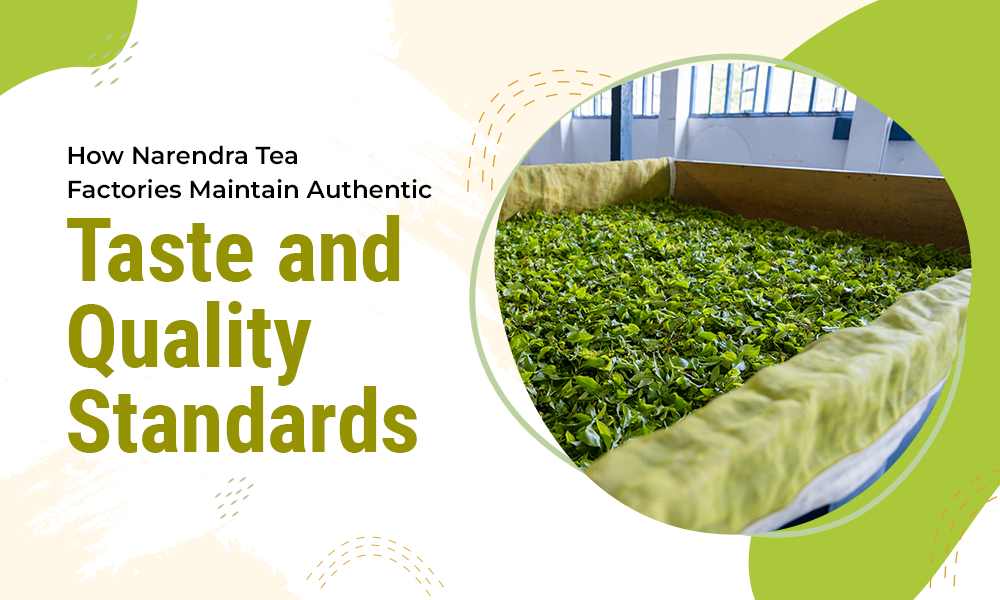
In the tea industry, consistency is not occasional; it is a result of precision, discipline, and deep-rooted expertise. For decades, Narendra Tea Company has built its reputation on delivering tea that is strong in character, rich in flavour, and unwavering in quality. Behind every cup lies a carefully managed process driven by advanced machinery, strategic factory locations, and a commitment to preserving the authentic taste of Indian tea.
From high-capacity CTC production to niche market specialities, Narendra Tea’s factories operate with one unified goal: to maintain authentic taste while meeting rigorous quality standards. Let’s explore how each unit of these best tea factories in India contributes to this commitment and how the group ensures excellence at every stage of tea manufacturing.
A Foundation Built on Strategic Locations
Quality tea begins with sourcing. Narendra Tea factories are strategically located near premium tea-growing regions in North Bengal. They serve only freshly plucked leaves from the tea gardens in India, which reach the factory floor quickly. Reduced transit time plays a crucial role in preserving the flavour compounds and natural aroma of tea leaves.
By situating factories such as Himalayan Tea in the small grower area of Bidhanagar and Vitco near Jalpaiguri town, we ensure direct access to fresh raw material. As a result, this proximity minimises oxidation delays and protects the leaf’s inherent character, the first step in maintaining authentic taste.
Vitco Tea: Precision Engineering for Premium CTC
Located near Jalpaiguri town, Vitco Tea represents state-of-the-art tea manufacturing. Specialising in premium-segment CTC tea, this factory follows a meticulous tear, crush, and curl process that defines classic Black Tea production.
The finely picked tea leaves are passed through cylindrical rollers equipped with sharp edges. These rollers tear, crush, and curl the leaves into uniform pellets. It is a critical step that influences infusion strength and briskness.
Here’s how Vitco maintains its quality standards:
Controlled Leaf Processing
Each batch is monitored during rolling to ensure consistency in pellet size and structure.
Advanced Machinery
Modern equipment minimises human error while preserving traditional flavour characteristics.
Smooth Production Flow
The factory’s well-organised infrastructure ensures that every stage, from withering to drying, operates seamlessly.
Vitco’s ability to produce fresh, consistent CTC tea reflects its balance between technological sophistication and traditional taste preservation.
Himalayan Tea: High-Capacity Production with Premium Standards
Himalayan Tea is the flagship factory of the group and houses the largest CTC manufacturing capacity within the organisational operations. However, scale does not come at the expense of quality.
The factory, equipped with efficient equipment and advanced machinery, handles large volumes without compromising precision. In this tea manufacturing company, each batch undergoes a carefully monitored production process to maintain uniformity in:
- Leaf texture
- Colour development
- Granule size
- Liquor strength
- Aroma profile
The modern machinery ensures controlled withering, precise cutting, and uniform fermentation — essential elements in CTC tea production. The result is a robust, flavourful tea that delights consumers while meeting strict quality benchmarks.
By combining scale with technological excellence, Himalayan Tea maintains both efficiency and authenticity.
Farm Tea: Niche Excellence and Market Trust
Farm Tea stands out for its niche positioning and loyal clientele. Unlike high-volume facilities, this factory focuses on market-specific production while maintaining uncompromised quality standards.
What makes Farm Tea exceptional is its systematic and disciplined tea-producing methods. The factory operates with a well-organised workflow that ensures:
- Fast yet controlled production
- Timely processing of fresh leaves
- Efficient packaging and dispatch
- Punctual delivery schedules
Speed, when managed correctly, helps preserve freshness. Farm Tea’s timely production cycle reduces storage time. The tea reaches clients with its natural aroma intact.
Consistent positive reviews highlight the factory’s dedication to quality. Maintaining its established standards is a priority, ensuring that loyal customers continue to receive tea that meets their expectations.
Neelkanth Tea: Consistency as a Core Principle
Neelkanth Tea Factory has earned recognition in the Indian tea industry for its consistent quality output. Being one of the best tea factories in India, Neelkant has a modern facility equipped with advanced machinery. Here, priority is standardisation without sacrificing authenticity.
Consistency in tea manufacturing involves controlling multiple variables:
- Temperature regulation during fermentation
- Uniform drying techniques
- Accurate grading and sorting
- Strict quality checks
Neelkanth’s processing systems ensure smooth and rapid production while safeguarding flavour integrity. Its ability to produce various teas further demonstrates operational flexibility combined with quality assurance.
The factory’s ideal location for tea production also plays a vital role in maintaining leaf freshness and taste consistency.
The Core Pillars of Quality Across Narendra Tea Factories
While each factory has its specialisation, the group follows common quality principles that define its brand reputation.
Advanced Machinery with Skilled Oversight
Modern equipment enhances precision, but expert supervision ensures that traditional flavour profiles remain intact. Technology supports craftsmanship — it does not replace it.
Strict Quality Control Checks
Multiple quality inspections are conducted during processing. Parameters such as moisture content, granule size, liquor colour, and aroma are closely monitored.
Efficient Production Management
Streamlined workflows reduce delays, preserving freshness and preventing quality degradation.
Commitment to Authentic CTC Character
All factories carefully maintain the distinct, strong, brisk, and malty profile of Indian CTC tea.
Consistent Raw Material Sourcing
Close relationships with growers ensure that only quality leaves are collected from the tea manufacturing company.
Balancing Tradition with Modernisation
One of the defining strengths of Narendra Tea factories is their ability to blend traditional tea-making values with modern industrial efficiency.
Traditional CTC processing principles are respected:
- Proper withering to reduce moisture
- Controlled oxidation for flavour development
- Uniform rolling for texture
- Precise drying for shelf stability
At the same time, modern machinery ensures scalability, hygiene, and uniformity, essential for meeting domestic and international demand.
This balance allows tea to preserve the authentic taste that tea lovers expect while adapting to evolving market needs.
Continuous Improvement and Industry Recognition
Narendra Tea factories continue to upgrade machinery and refine processes to stay ahead in the market. Positive feedback from clients, market trends, and improving quality standards across all units have positioned them as the best tea factories in India.
The positive reputation of Himalayan Tea, Vitco Tea, Farm Tea, and Neelkanth Tea reflects years of consistent effort, technical precision, and dedication to customer service.
Commitment to Timely Delivery and Client Trust
Authentic taste is important, but reliability builds long-term partnerships. Narendra Tea factories are structured to maintain punctual delivery schedules. Efficient production timelines ensure that tea reaches buyers fresh and within committed deadlines.
This operational discipline strengthens client trust and reinforces the company’s reputation in the competitive tea industry.
Final Thoughts
Maintaining authentic taste in tea is a complex process that requires coordination between sourcing, machinery, skilled labour, and quality control. The factories of Narendra Tea Company achieve this goal through strategic locations, advanced manufacturing systems, disciplined workflows, and a steadfast commitment to consistency.
From the high-capacity sophistication of Himalayan Tea to the premium precision of Vitco, the niche expertise of Farm Tea, and the dependable standards of Neelkanth, each factory plays a crucial role in delivering tea that honours India’s rich tea heritage as one of the best tea factories in India.
So, explore Narendra Tea Company, where every cup tells a story of careful craftsmanship, modern efficiency, and a lifelong commitment to quality.
Share:









Marcel Proust’s Madeleine: Tea as a Trigger for Memory
Marcel Proust’s monumental work, “In Search of Lost Time” (À la recherche du temps perdu), features one of the most famous tea-related passages in literature—the Madeleine episode. In this scene, the narrator dips a madeleine into a cup of tea, and the taste triggers a flood of memories from his childhood.
The act of dunking the madeleine into tea becomes a powerful sensory experience that awakens long-forgotten recollections. Proust’s prose masterfully captures the profound connection between taste and memory, illustrating how something as simple as tea and a pastry can transport us back in time.
Sustainable Tea Sourcing
Sourcing Method
As consumer awareness of environmental and social issues grows, sustainability has become a vital concern in the tea industry. Sourcing green tea sustainably involves certain procedures.
- Ethical Tea Processing: Supporting suppliers who prioritize fair labor practices, safe working conditions, and fair wages for tea farmers.
- Organic Farming: Opting for organic green teas minimizes exposure to harmful pesticides and fertilizers.
- Biodiversity: Partnering with suppliers who protect and enhance local ecosystems.
- Water Conservation: Choosing suppliers with efficient irrigation systems and water management practices.
- Trackability: Ensuring the ability to track the tea’s journey from farm to cup to verify sustainability claims.
Quality Control in Green Tea Sourcing
Maintaining consistent product quality is essential for building a strong brand reputation in India. Key quality control measures include several steps.
- Sensory Evaluation: Employing skilled tea tasters to assess aroma, flavor, and appearance.
- Laboratory Testing: Conducting chemical analysis to verify purity, pesticide residues, and heavy metal levels.
- Third-Party Certifications: Getting certified by reputable organizations to ensure product quality and safety.
- Regular Supplier Audits: Conducting on-site inspections to assess production processes and compliance with quality standards.
- Traceability Systems: Implementing robust tracking systems to identify the source of any quality issues.
Sourcing Rare and Exclusive Green Teas
Sourcing rare and exclusive variant requires a combination of expertise and perseverance. Keeping in mind the following factors can help us improve the quality.
- Limited Availability: Being prepared for inconsistent supply and potential price fluctuations.
- Direct Relationships: Building strong partnerships with small-scale producers or tea gardens.
- Authenticity Verification: Thoroughly investigating the tea’s origin and production process to ensure authenticity.
- Premium Pricing: Paying premium amounts for rare and exclusive teas ensuring their quality according to the demand.
- Customer Education: Educating consumers about the unique characteristics and value of these exceptional teas.